

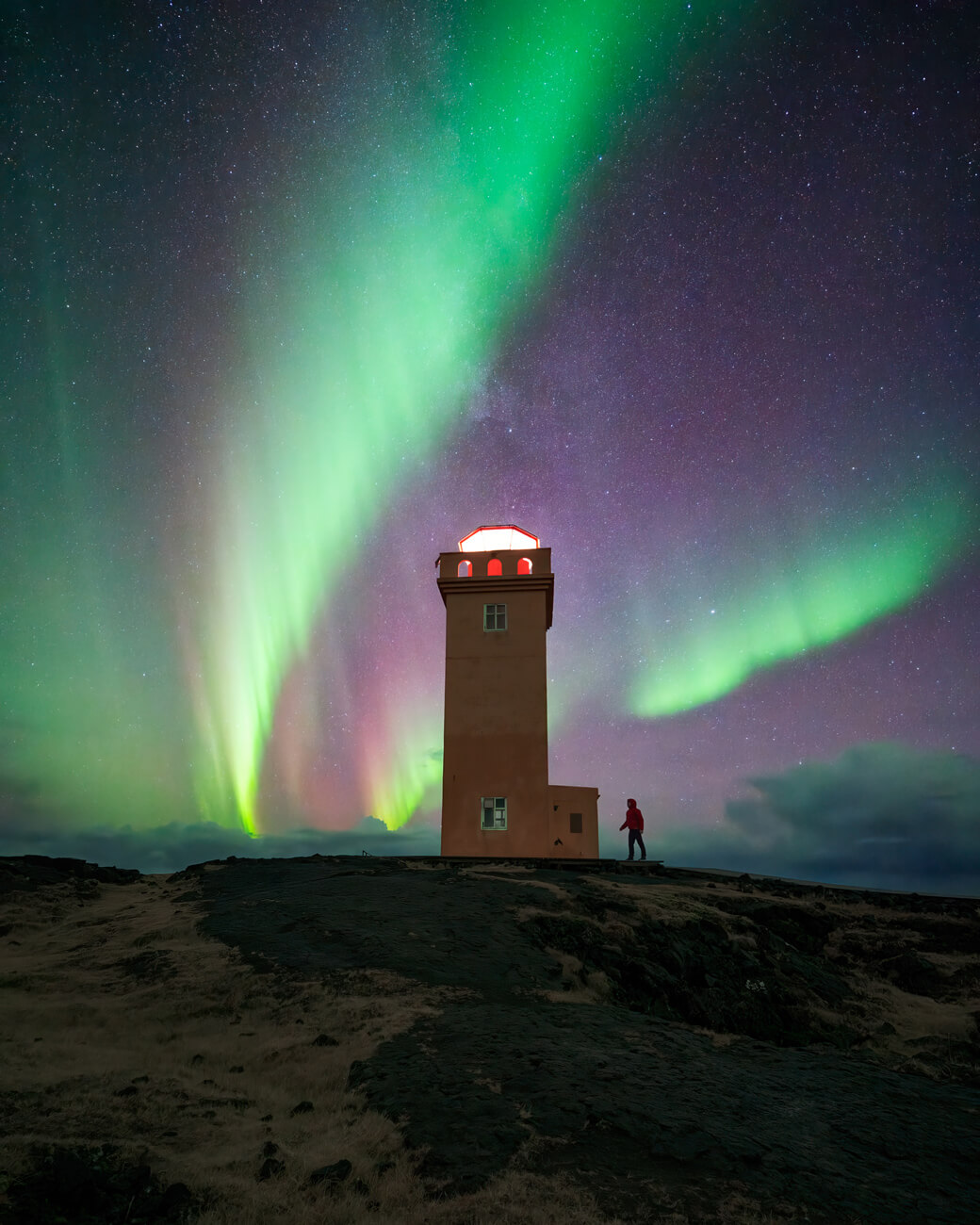
We spent 10 days driving all the way around Iceland in October, through rain, wind and a few perfect autumn days. Is it a good month to go? Yes, if you plan for it. The days are still long enough, the nights are dark enough for the northern lights, and the Ring Road is open. Here is what the weather, daylight, driving and ice caves are really like, and what to do.
Table of Contents
Quick facts:
Daylight: about 11 hours at the start of October, closer to 8 hours by the end
Temperatures: about 2–8 °C
Northern lights: in season, with 13–16 hours of darkness
Roads: Ring Road open; F-roads closed
Ice caves: tours begin in October
Northern lights in Iceland in October
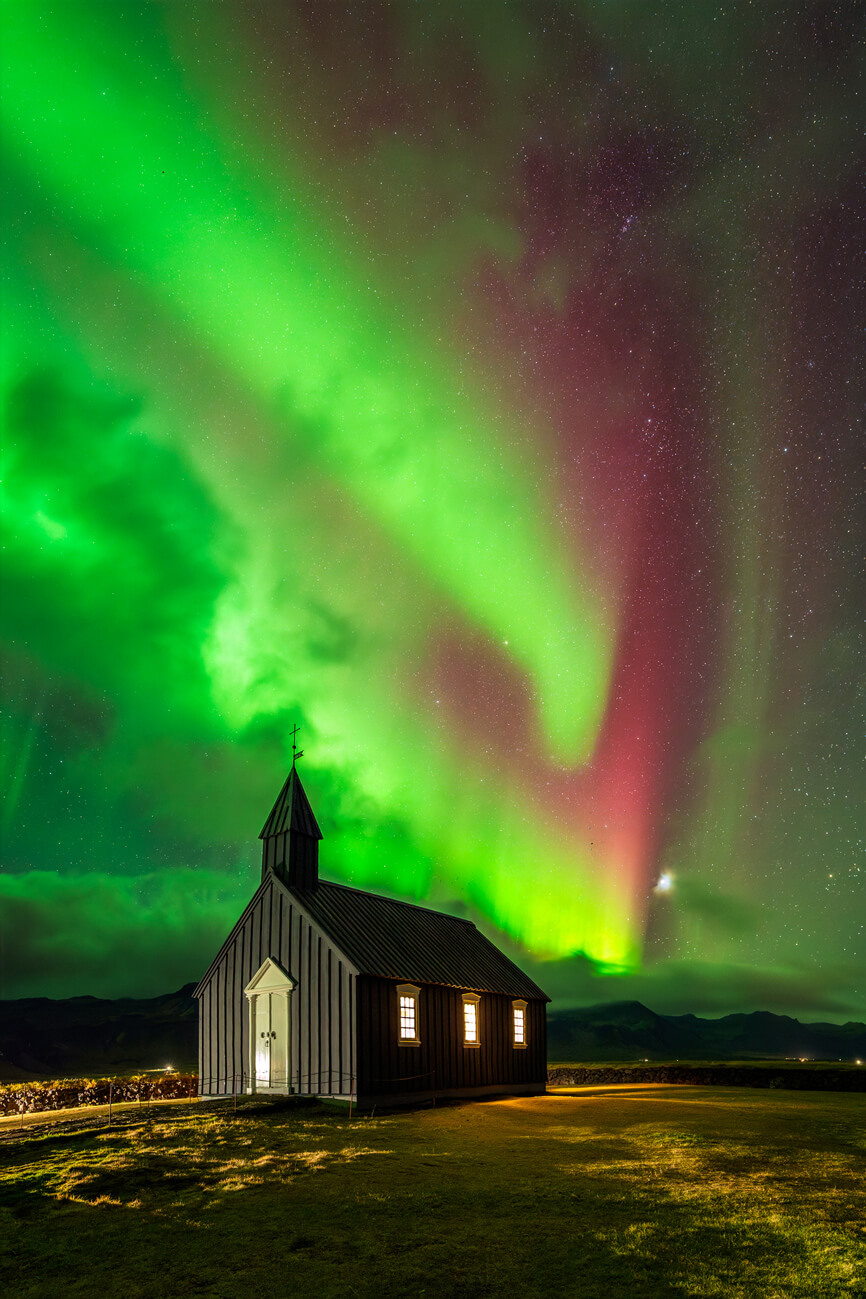
Alright, let’s start with probably the main reason you’re thinking about visiting Iceland in October – the Aurora. In general, the season runs from September to April, and October nights give you 13–16 hours of darkness. Check the Icelandic Met Office aurora forecast, which shows activity on a 0–9 scale with a cloud map, and in Iceland a 2 or 3 is enough, so clouds decide most nights. From personal experience – November was a bit clearer in terms of cloud cover, but October can be tricky because of the rain. The winter ahead is still a good window, because the 2026–27 declining phase of the solar cycle can still produce strong storms.
How to see the Northern lights in Iceland – practical tips
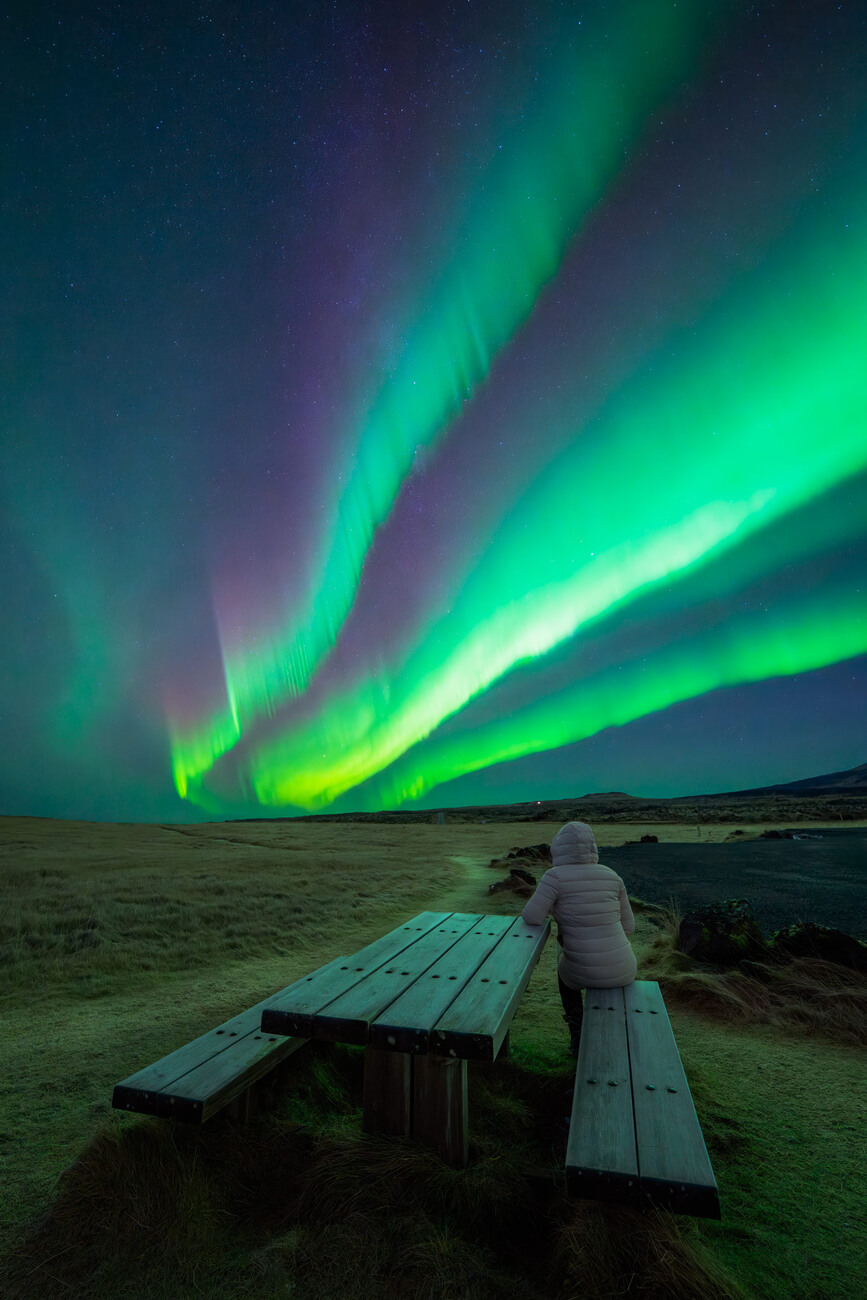
I’ve been to Iceland 7 times in total (yes, I know, I can’t seem to get enough of this country) and with every time, I’ve gotten better and better at chasing the Aurora. As a photographer, this was the main reason for most of my visits, so I’ll save you a ton of hassle and give you the icing on the cake.
- First, download the app “My Aurora Forecast” (or just “Aurora”). This app has alerts that can even wake you up in the middle of the night, so you never miss them because of the comfort of your own bed. Make sure to turn on critical alerts and allow them on your phone. Check out the forecast for the next hours and days – the higher the KP, the better. However, the KP index is not really a golden rule. I’ve seen the Northern lights in Iceland even at KP below 1! So always be on the lookout.
- Second, download the app “Hello Aurora”. Make sure to turn ON your notifications for it – this app is fed by users just like you. Whenever someone sees the Aurora, they upload a photo on the app – in real time – with the exact location of the spotting. This must be your main trigger to get in your rental car and drive towards a cloudless sky. This app was absolutely priceless – you can even see in the photos themselves how the Northern lights in Iceland look right at that moment.
- Third, here’s a pro photographer’s tip. The Icelandic Met Office has the best and most accurate cloud cover map I’ve ever seen. Honestly, this map is the reason I keep going back to Iceland – I have not been able to predict the cloud cover in any other Northern country – and thus, where to shoot on that particular night. The cloud cover map is extremely reliable, because it only predicts data for 48 hours ahead. You can check which spots will be clear – and plan your evening’s location, combining a perfect foreground with an Aurora backdrop. Absolute perfection.

Should I visit Iceland in October?
You might be wondering whether Iceland in October is worth visiting – the weather is a bit more unpredictable, but there is a balance between daylight and night time. Iceland in October is actually the best of both worlds – you have good chances of seeing the Northern lights, it’s not that cold yet, and you can do some winter activities like a glacier hike! In case you just have 24 hours in this beautiful country, you can check out this guide on a layover in Iceland. Let’s dig in and see all the details:

Visiting Iceland in October – Autumn
Pros of visiting Iceland in October
- Ice caves and glacier hikes in Iceland – yep, October is the perfect month to do that in Iceland, as it’s not that cold yet and there is enough daylight, so you can enjoy these fully! You can even see as much as 3 ice caves in just one hike, which are truly unforgettable.
- Daylight is between 8 and 11 hours – just enough so you can sightsee
- Nighttime is between 13 and 16 hours – plenty not to disturb your sleep. Have you tried to sleep for 8 hours when it’s sunny outside (just like it is during Iceland’s midnight sun)? For me, it would be hell!
- October and November are the best months for spotting the Northern lights (but remember – there is no guarantee!)
- Average temperatures in Iceland in October vary between 2 and 8 degrees – we had a few quite nice days, but we had a few days with severe wind and rain too. Icelandic weather is always a gamble
- Boat tour at a glacier lagoon – Iceland in October is full of opportunities like this!
Cons of visiting Iceland in October
- Iceland in October won’t be as green as you see it in the photos during the summer – but hey, it will have lovely autumn colors!
- Overall weather of Iceland in October – as I said, it’s quite unpredictable. When it rains in Iceland, it’s pretty bad (definitely not your average European rain). However, for the 10 days we spent in Iceland in October, we had only one day when the weather was truly horrid – mega wind and rain and no raincoat or boots can save you.
- Just in case – get a 4×4 car – at some spots the wind was so bad, that I was scared it would blow our car off the road.
Visiting Iceland in high season – summer
So how would this compare to visiting Iceland during the summer? What would you miss if you visit Iceland in October?
Pros of visiting Iceland in summer
- The F roads are open – they usually close in October and reopen in May; thus you can explore even more of Iceland’s hidden gems
- Hire a smaller car (instead of a 4×4) and save money
- Daylight – it’s plenty, and for some of June the sun doesn’t even set
- Temperatures of Iceland in the summer – usually around 15-20 degrees during daytime!
- Everything is green
- Rain is rarer during the summer than it is in October, but just in case – be prepared with waterproof clothes
- Whale watching – whales are most spotted during the summer – you can book a tour between May and November
- Puffin watching – these tours to see some of the cutest birds alive are only available between May and August
- Luggage – overall the weather during summer is much better, so you might fit into only a backpack.
Cons of visiting Iceland in summer
- Nighttime – if you choose the early summer months, bear in mind that the sun never sets, so you might have trouble sleeping! Definitely book accommodation that has proper blinds.
- Unless you choose the very end of August or September, there is almost no chance to see the Northern lights. You do need darkness in order to enjoy it!
- You will miss winter activities like glacier hikes and ice caves
- It is generally more expensive to visit Iceland in the summer
- There are a lot more tourists, so you would need to pick hours outside of the normal visiting pattern
Weather in Iceland in October
Weather in Iceland in October. October is the month when summer turns into winter, and the weather changes fast. Expect rain, wind and temperatures around 2–8 °C, with the first snow on the mountain peaks. The north and the highlands turn wintry earlier than the south. On the Ring Road and the South Coast, icy roads are uncommon in October, but mountain passes can freeze. Early October is usually kinder than late October. For the 10 days we spent in Iceland, we had only one truly horrid day, with mega wind and rain, and a few quite nice ones.
The one rule I would repeat: check the forecast every morning at vedur.is and the road conditions at road.is, and change your plan for the day if it says so.
Daylight hours in Iceland in October
Daylight hours in Iceland in October. The days shorten very quickly. You get about 11 hours of daylight on 1 October and only about 8 hours at the end of the month. In mid-October the sun rises around 08:15 and sets around 18:10, so there is enough time for sightseeing, but you need to plan. I would do the long drives and the important stops first and keep the short ones for the afternoon. On the other side, the nights are long and dark, which is great for the northern lights.
Things to do in Iceland in October
October is a crossover month. Many summer activities still run, and the winter ones begin. These are the things I would plan for:
- The Golden Circle. Þingvellir, Geysir and Gullfoss are close to Reykjavík and work well even with a short trip, and with the autumn colors they are less crowded than in summer.
- The South Coast. Seljalandsfoss, Skógafoss and the black sand beach at Reynisfjara are the classics. We also crossed the water at Gljúfrabúi and visited the plane wreck, so bring waterproof shoes. This was my absolute favorite stop on all of my trips to Iceland.
- Glacier hikes and ice caves. A glacier hike is a great October activity, and ice cave tours begin this month. Our glacier hike with 3 ice caves in one day shows what it looks like. Tours are guided only, and the first weeks of the season are the least predictable, so book flexible dates.
- Jökulsárlón glacier lagoon. The lagoon is open in October, and a boat tour is a lovely way to see the icebergs.
- Hot springs. After a cold, windy day nothing beats a soak. Choose the Blue Lagoon, Sky Lagoon or the Mývatn Nature Baths in the north.
- Whale watching. The main season is May to October, but boats from Húsavík and Reykjavík often keep sailing into November. Here is a tour from Húsavík. Sea conditions can cancel trips, so keep a spare day.
- Imagine Peace Tower. On 9 October, John Lennon’s birthday, Yoko Ono’s tower on Viðey Island is lit, and it shines every evening until 8 December. From 10 October there are evening boat tours from Skarfabakki. It’s a lovely thing to see if you are in Reykjavík at the right time.
- First Day of Winter. It’s marked on a Saturday in late October, and it’s a nice local touch if you are in the country then.
For a plan day by day, see my 4 days in Iceland and 10-day itinerary.
Where to stay in Iceland?
If you drive the Ring Road, you will change hotels almost every night. These are the places where we stayed during our 10 days, in the order we drove. For the northern lights, a guesthouse outside a town, with dark skies and open views, can give you a chance to see them from your door.
- Selfoss – BSG Apartments– Booking.com rating: 9.2, price per night: 180 EUR
- Skaftárhreppur – Hörgsland Guesthouse – Booking.com rating: 7.5, price per night: 238 EUR
- Höfn – Hotel Jökull– Booking.com rating: 8.1, price per night: 167 EUR
- Egilsstaðir – Ormurinn Guesthouse – Booking.com rating: 8.9, price per night: 116 EUR
- Akureyri – Hotel Halond – Booking.com rating: 9.0, price per night: 154 EUR
- Ólafsvík – Bikers Paradise – Booking.com rating: 8.3, price per night: 129 EUR
- Reykjavík – 201 Hotel – Booking.com rating: 8.3, price per night: 136 EUR
How many days should I visit Iceland for?

The longer you visit Iceland for, the more you can see! But here are the most popular options:
- Visit Iceland for a weekend – it’s just enough for you to go around the Golden circle (a few sights really close to Reykjavik which you can see in a day)
- Visit Iceland for 5 days – 5 days is great for the Golden circle (1 day), the South coast (2 days) and the Snæfellsnes peninsula in the West (1-2 days). You’ll see some of the most amazing waterfalls and breathtaking sights! However, you’ll also have quite a bit of driving back, so most people choose the next scenario:
- Visit Iceland for 7-10 days – for a week or longer, you can go around all of Iceland – on what they call the Ring road (check out our Iceland 10 day itinerary). Don’t get me wrong, you will be driving a lot, but at least you won’t be going back and forth as you will for 5 days. You can add whale watching in Husavik, the stunning lake Myvatn (where lots of Game of Thrones scenes were shot, including the love cave of Ygritte and Jon Snow), and a few other cute towns along the way. This is the path we chose too for Iceland in October – for 10 days, we went all around Iceland (and changed 7 hotels!)
- Visit Iceland for more than 10 days – you would still be going around the Ring road, but you could also go up a few of the F roads and do some tougher hikes. Remember, these are only open during the summer months!
Should I hire a car in Iceland?
Yes, absolutely – YES! Don’t do the expensive 3-4 day trips, just get a car and use guided trips for things like the whale watching or glacier hikes. A 4×4 vehicle is also recommended if you’re visiting Iceland in October, but if you’re really on a budget, you should be okay with a smaller vehicle.
However, you can also opt in and get an RV/motor home. They are more expensive, but you’ll save money on accommodation. There are many overnight parking posts along the ring road, so you wouldn’t have to worry about that.
Tips on driving in Iceland in October
- To be on the safe side, get a 4×4 vehicle. It’s a bit more pricey, but it will be more comfortable and you will feel safer
- HOLD THE DOOR – you’ll see such a sign on most car rentals. The winds are sometimes pretty strong, so don’t risk your vehicle doors
- The F-roads are closed in October, so don’t attempt to take them on.
- BE SAFE – for 10 days, we saw at least 3 car accidents on the Icelandic ring road!
- Don’t speed – cameras are everywhere, so you will absolutely get a ticket for speeding.
- Gas up at EVERY opportunity – you don’t want to be stuck without gas in Iceland in October… right? When driving along the ring road, sometimes you might not see a gas station for hours. So plan ahead and never leave your tank empty below half!
- Insurance – you might think driving in Iceland will cost you just as much as in other European countries. It doesn’t seem expensive at all at first sight, but you should absolutely get every additional insurance available – especially sand and ash insurance, as it’s the most common damage to vehicles in Iceland
- Get a comfortable vehicle – if you can’t drive a stick well, get an automatic car. If you’re visiting Iceland in October for 10 days or more, you will spend sooo much time in the car – it’s important that it is as comfortable as possible!
- Only stop at designated stops – never stop in the middle of the road to take a photo, it’s extremely dangerous
- When you see a parking with more than 4 vehicles on the Ring Road – stop there! Surely, there is a pretty sight hiding, even if not visible from the road 🙂
- Check conditions every day at road.is and safetravel.is. From 1 October the road map on umferdin.is is updated every day between 07:00 and 22:00.
- Ask for winter tyres when you book. In October they are not always standard, and every rental car has them from 1 November.
- Plan around daylight. In late October it’s dark by about 17:00 to 18:00, so avoid long drives after sunset, especially in the north.
The Blue Lagoon (one line, put it in your swimsuit bullet)
The Blue Lagoon has closed temporarily during eruptions on the Reykjanes peninsula (it reopened on 5 March 2026), while the airport has stayed open. Check safetravel.is and the Blue Lagoon website before you book, and remember Sky Lagoon and the Mývatn baths as alternatives.
How much does an Iceland trip cost?

Prices checked in November 2026
A trip to Iceland is still pricey, but you can keep it under control. This is what a 10-day Ring Road trip for two in October costs at 2026 prices, completely self-organized apart from the glacier hike and the northern lights tour. When we went in 2019, the same trip cost us 2,750 EUR.
- Food: about 20–25 EUR per person per day for groceries (breakfast, sandwiches and one cooked dinner). A main course at a mid-range restaurant is about 25–45 EUR, so a dinner for two with a drink costs about 80–120 EUR, and a burger or pizza is about 15–22 EUR per person. We planned for 3 restaurant dinners.
- Car rental: about 75–100 EUR per day for a small 4×4 (Dacia Duster class) with gravel and sand and ash protection, booked ahead. Base rates for a Duster start at about 7,000–9,500 ISK (50–70 EUR) per day, and the protection packages add about 3,850–5,950 ISK (28–43 EUR) per day.
- Gas: about 25–35 EUR per day. In October 2026 petrol was about 282 ISK per litre (about 2.05 EUR) and diesel about 327 ISK (about 2.40 EUR), and a small 4×4 uses 5–7 litres per 100 km. This assumes about 2,200 km (the Ring Road is about 1,330 km, plus detours).
- Plane tickets: about 200–350 EUR per person return from Bulgaria, with a stop (the lowest return fare I saw was 198 EUR, and Wizz Air is usually the cheapest). Add bags and priority boarding.
- Accommodation: about 90–130 EUR per room per night in October for a budget guesthouse or hotel room. We aim for the cheaper end by booking early.
- Activities: the glacier hike with an ice cave costs about 145–185 EUR per person (4 hours). A northern lights bus tour costs about 70–105 EUR per person, and most operators let you rebook for free if you don’t see the lights.
Total for 2 people for 10 days: about 3,400 – 4,800 EUR. The low end means cooking most meals, booking everything early and taking the cheapest car and rooms.
Bear in mind that in October you will save money compared with summer. Accommodation and car rental are cheaper, and the difference can be big for the same car. If you’re looking for even more tips on saving money, check out these Iceland on a budget tips.
Iceland packing list for October

Even if you visit during summer or spring, I would highly recommend that you take the following items:
- Camera – well, we can’t go to Iceland and not get a camera, right? 😁 My personal favorites that I always travel with are Sony A7III camera body and lenses Sony GM 14/1.8 and Sony 24-105 f/4.
- Waterproof shoes – we got rubber boots (like these DUNLOP rubber boots), but bear in mind they might keep moisture in. Also – get a pair that is 1-2 sizes larger! You will need waterproof shoes for a few hikes and waterfalls, as some places you’ll have to cross by water (like the Gljufrabui waterfall). We were also able to hike on top of a glacier with our rubber boots (with ice shoes on top, of course). The best waterproof membrane out there is called GORE-TEX, here is a great Gore-tex shoes model.
- Waterproof jacket and Waterproof pants – on top of those thermo layers. You’ll thank me later.
- Thermal socks – just in case, get 2 pairs of wool socks in addition to some normal pairs. In one of the days with super bad weather we had, we had to dry our socks at the car heater, as we didn’t have an extra pair!
- Thermal layers (pants/shirt) – layers are the most important in Iceland! At one moment, the weather might be super cold and windy, and then the next – sunny and pleasant.
- Gloves, scarf and a hat – they’re absolutely essential in any Iceland packing list
- Swimsuit – if you’re visiting the Blue Lagoon or our Lake Myvatn baths, you’ll need it! 🙂
- External battery – for your phone and camera. I personally LOVE my Anker power bank, it’s extremely durable unlike most cheaper ones.
- Don’t overpack – if you’re visiting Iceland for a week or longer, you’ll have a lot of hotel hopping and you’ll need to drag all the luggage with you at all times (even if it’s in the car). Try to plan for laundry rather than overpacking clothes. Take a few t-shirts and pants, you wouldn’t need to have one for each day you’re there.
Find my full Iceland packing list in my Amazon Storefront
Other advice about visiting Iceland in October

- You won’t need cash – we didn’t spend ANY cash during our trip to Iceland, we could pay absolutely everything by card, even a small shuttle to the Plane Wreck!
- Iceland is NOT within the European Union but within EEA – so if you’re from the EU, you won’t need to buy a SIM card to get around, the EU roaming rules apply
- Offline Google Maps – download them before your trip for all of Iceland, it will save you data and help you if you’re lost (even if there is no network)
- Electrical plugs – they’re standard European in Iceland
- Gas up at every opportunity – I just feel the need to repeat this as much as I can – you might not see a gas station for miles!
Iceland in October is just magical – less tourists than in the summer, glacier hikes and ice cave opportunities, and good chances to spot the Northern lights. However, do be prepared for the weather and road conditions and be safe – never go off the marked paths. You’ll thank me later 😉

1 comment
[…] Iceland in October is an excellent time to travel because the weather is beginning to cool, which makes outdoor activities even more enjoyable. Here are a few most important highlights: […]